In the relentless churn of the digital era, the term “next-generation technology platform” is often tossed around with such frequency that its profound meaning risks dilution. Yet, every so often, a launch emerges that is not merely an incremental update or a feature-rich application, but a fundamental re-architecting of how technology serves humanity, business, and society. The debut of such a platform is more than a product release; it is a seismic event that redraws competitive landscapes, unlocks unprecedented efficiencies, and poses a formidable challenge to established incumbents. This article delves deep into the anatomy, strategy, and far-reaching implications of a true next-gen tech platform launch, moving beyond the hype to explore the core pillars that define its potential for lasting impact.
The transition from legacy systems to agile, intelligent platforms is no longer a luxury but a strategic imperative. We will explore the multifaceted components of a modern platform launch, from its underlying architectural genius to its meticulously crafted go-to-market motion, and finally, to its envisioned role as a catalyst for widespread digital transformation across global industries.
A. Deconstructing the “Next-Gen” Paradigm: Beyond Buzzwords
To understand the significance of a new platform’s launch, we must first establish what separates a genuinely “next-generation” offering from its predecessors. It is not defined by a single technology but by a synergistic convergence of several foundational principles.
A. The Core Architecture: Scalability, Resilience, and Composability
The bedrock of any powerful platform is its architecture. Next-gen platforms are born in the cloud, built with a microservices architecture. Unlike monolithic applications where all functions are intertwined, a microservices approach breaks down the platform into a collection of small, independent services. This allows for:
-
Fault Isolation: A failure in one service (e.g., user authentication) does not cascade and bring down the entire platform.
-
Continuous Deployment: Development teams can update, deploy, and scale individual services independently, dramatically accelerating innovation cycles.
-
Technological Freedom: Teams can use the best programming language and tools for each specific service.
Coupled with microservices is an API-first design. Every function is accessible through robust Application Programming Interfaces (APIs), making the platform inherently integrable and extensible. This composability allows businesses to “compose” their own unique digital solutions by plugging the platform’s capabilities into their existing tech stack, creating a tailored ecosystem rather than being forced into a rigid, one-size-fits-all software.
B. The Intelligence Infusion: Pervasive AI and Machine Learning
While many products now claim to have “AI,” next-gen platforms have AI and Machine Learning (ML) woven into their very fabric. This is not a standalone feature but a core utility that enhances every interaction. This intelligence manifests as:
-
Predictive Analytics: Moving from descriptive analytics (“what happened”) to prescriptive and predictive insights (“what will happen and what should I do about it”).
-
Hyper-Personalization: Delivering unique experiences, content, and recommendations to every single user based on their behavior, role, and historical data.
-
Intelligent Automation: Automating complex, multi-step workflows that traditionally required human intervention, from data processing and reconciliation to customer support routing and threat detection.
-
Natural Language Processing (NLP): Allowing users to interact with the platform using conversational language, making powerful technology accessible to a non-technical audience.
C. The Experience Imperative: Intuitive, Unified, and Context-Aware
User Experience (UX) is the battleground where modern platforms win or lose. Next-gen platforms prioritize a frictionless, intuitive, and aesthetically pleasing interface. This involves:
-
Unified Interface: Providing a single, cohesive experience across all modules and functionalities, eliminating the jarring effect of navigating between seemingly disconnected applications.
-
Context-Awareness: The platform anticipates user needs based on their current task, location, and time, surfacing relevant information and tools proactively.
-
Omnichannel Consistency: Delivering a seamless experience whether the user is on a desktop browser, a mobile app, or a tablet, with data and state synchronized perfectly across all devices.
D. The Trust Foundation: Security, Privacy, and Governance
In an age of escalating cyber threats and stringent data privacy regulations like GDPR and CCPA, a next-gen platform must be built on an uncompromising foundation of security. This goes beyond basic encryption to include:
-
Zero-Trust Architecture: Operating on the principle of “never trust, always verify,” requiring strict identity verification for every person and device trying to access resources on the network, regardless of whether they are sitting within the corporate firewall or not.
-
End-to-End Encryption (E2EE): Ensuring that data is encrypted from the sender’s device until it reaches the intended recipient, making it unreadable to anyone else, including the platform provider.
-
Granular Compliance Tools: Providing administrators with sophisticated controls to manage data residency, access policies, and audit trails to ensure compliance with industry and regional regulations.
B. The Anatomy of a Landmark Launch: A Phased Approach
A successful platform launch is a masterclass in strategic execution. It is a multi-phase orchestration that builds momentum, validates the product, and ensures a smooth market entry.
A. The Stealth and Strategy Phase: Laying the Groundwork
Long before any public announcement, the foundational work begins. This phase is characterized by intense R&D, closed-door testing, and strategic positioning.
-
Market Gap Analysis: Identifying a significant, unaddressed pain point or a latent opportunity in the market that existing solutions are too slow, too expensive, or too simplistic to tackle.
-
Architectural Blueprinting: Designing the platform’s core architecture for scale, security, and flexibility, making critical technology stack decisions.
-
Early-Access Program (EAP): Inviting a select group of visionary customers or partners to use the platform in a real-world setting. This is not about finding minor bugs; it’s about validating core value propositions, gathering deep feedback, and co-creating the future of the product.
B. The Pre-Launch Buzz Generation: Building Anticipation
This is where marketing artistry meets strategic communication. The goal is to create a sense of anticipation and curiosity without revealing all the cards.
-
Teaser Campaigns: Utilizing social media, targeted ads, and industry publications to release cryptic messages, abstract visuals, or countdowns that hint at something transformative on the horizon.
-
Content Marketing: Publishing whitepapers, blog posts, and research reports that educate the market on the problem the platform is designed to solve, establishing thought leadership before the product is even named.
-
Building a Community: Creating a landing page to collect email sign-ups from interested parties, effectively building a pre-qualified audience for the launch day announcement.
C. The Launch Event: The Grand Unveiling
The launch event is the culmination of all previous efforts. In today’s digital-first world, this is typically a high-production virtual event streamed globally.
-
The Narrative Arc: A successful launch keynote tells a story. It starts with the problem, agitates the pain, introduces the hero (the new platform) as the solution, and culminates in a live demonstration that showcases its power and simplicity.
-
The “Wow” Moment: This is the core of the demo. It could be showing how a complex, week-long process is now completed in minutes, or demonstrating the AI’s ability to generate insightful predictions from messy data.
-
Strategic Partnerships: Announcing key technology or channel partners during the event adds credibility and signals the platform’s intent to become an ecosystem, not just a product.
D. The Post-Launch Momentum: Adoption and Evolution
The work intensifies after the launch event. This phase is critical for converting interest into adoption and proving the platform’s long-term viability.
-
Onboarding and Enablement: Providing a frictionless onboarding process, comprehensive documentation, video tutorials, and responsive support to ensure early adopters can quickly derive value.
-
Aggressive Roadmap Communication: Being transparent with the user community about the product’s future, sharing a public roadmap that shows commitment to continuous innovation based on user feedback.
-
Analyzing and Iterating: Monitoring key adoption metrics, support tickets, and user behavior data to identify areas for immediate improvement and inform the next development cycle.
C. The Ripple Effect: Transformative Impact Across Industries
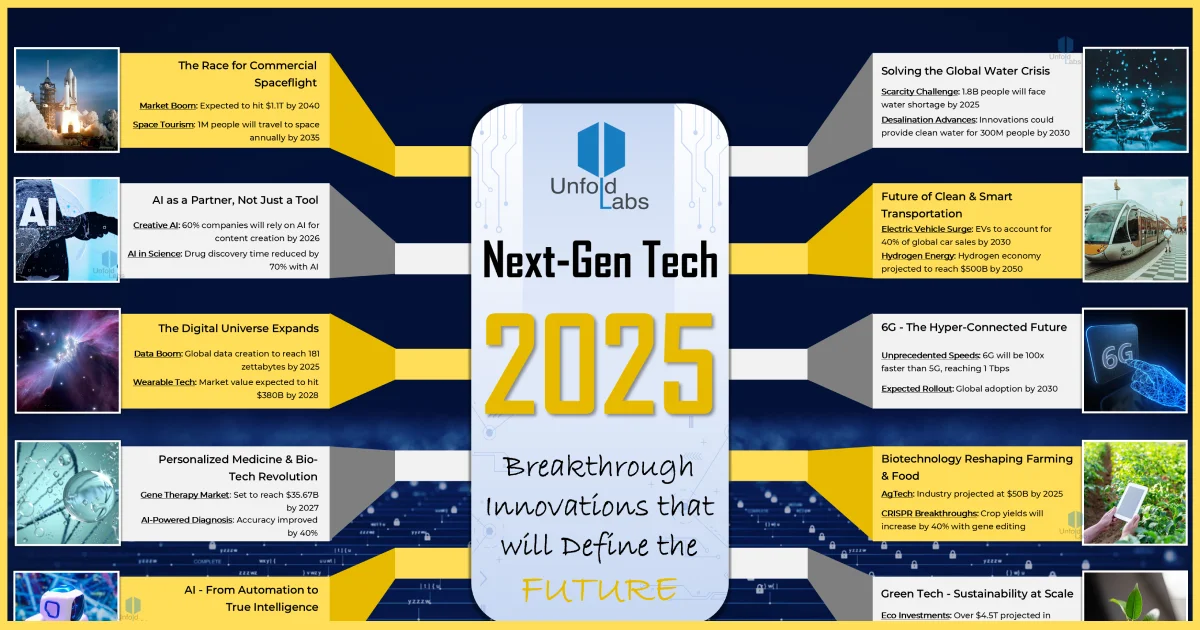
A truly next-generation platform does not exist in a vacuum; its launch sends ripples across multiple sectors, enabling new business models and disrupting old ones.
A. Revolutionizing Financial Services: Fintech and Beyond
The financial industry, burdened by legacy mainframes, is ripe for disruption. A next-gen platform can:
-
Democratize Algorithmic Trading: Provide scalable, AI-driven analytics tools that were once the exclusive domain of large hedge funds to a broader range of investors.
-
Power Embedded Finance: Enable any non-financial business (e.g., an e-commerce site or a SaaS company) to seamlessly offer financial products like loans, insurance, or branded payment cards through APIs.
-
Enhance Regulatory Compliance (RegTech): Automate the monitoring and reporting of complex financial transactions, reducing compliance costs and human error.
B. Reimagining Healthcare: From Treatment to Prevention
Healthcare is shifting from a reactive, treatment-focused model to a proactive, preventative one. A new tech platform can be the engine for this shift.
-
Precision Medicine: Integrate genomic data, patient health records, and real-time data from wearables to create personalized treatment plans and predict health risks.
-
Streamlined Clinical Trials: Use AI to identify ideal candidates for clinical trials, manage patient data more efficiently, and accelerate the path to new drug discoveries.
-
Telehealth 2.0: Move beyond simple video consultations to integrated platforms that include remote patient monitoring, AI-powered diagnostic support, and seamless electronic health record (EHR) integration.
C. Empowering the Future of Work: The Intelligent Workspace
The concept of the office has been permanently altered. Next-gen platforms are creating the digital fabric for the future of work.
-
Asynchronous-First Collaboration: Building tools that are not centered around real-time meetings but are designed for deep work and collaboration across different time zones.
-
The Metaverse for Work: Creating immersive 3D virtual spaces for meetings, training, and social connection that go beyond the limitations of 2D video grids.
-
AI-Enhanced Productivity: Integrating AI assistants that can summarize meetings, automate follow-up tasks, transcribe conversations, and surface relevant company knowledge on demand.
D. Building Smarter Cities and Infrastructure
Urban centers are under increasing strain. Intelligent platforms can form the “digital nervous system” of a smart city.
-
Intelligent Traffic Management: Using real-time data from sensors and cameras to optimize traffic light sequences, reduce congestion, and manage public transportation flows.
-
Predictive Maintenance for Utilities: Monitoring the condition of critical infrastructure like power grids and water pipes to predict failures before they occur, preventing costly and disruptive outages.
-
Resource Optimization: Dynamically managing energy consumption across city buildings, street lighting, and other public assets to reduce costs and the carbon footprint.
D. Navigating the Challenges: The Path to Successful Adoption
Despite the immense potential, the path for a new platform is fraught with challenges that must be strategically navigated.
A. The Specter of Technical Debt and Integration Complexity
The very flexibility of a modern platform can become a liability if not managed correctly. Rapid innovation can lead to cutting corners, accumulating “technical debt” that slows down future development. Furthermore, convincing enterprises to rip out and replace their existing systems is a monumental task. Therefore, the platform must excel at seamless integration with the tools businesses already use and love, through pre-built connectors and a powerful API.
B. The Intensifying Battle for Talent
Building and maintaining a complex platform requires a rare blend of skills: cloud architecture, data science, DevOps, security, and UX design. There is a global war for this top talent, and the success of the platform is directly tied to the ability of the company to attract, retain, and empower these individuals.
C. The Ethical Quagmire of Data and AI
With great data power comes great responsibility. Platforms that leverage AI for decision-making must be transparent about how their algorithms work to avoid “black box” stigma. They must have robust protocols to identify and eliminate bias in training data, ensuring their systems are fair and equitable. A single misstep in data privacy or an AI ethics scandal can irreparably damage a platform’s reputation.
D. The Inevitability of Market Saturation and Competition
No platform launches into an empty field. It must contend with established giants and a constant stream of agile startups. A clear and defensible differentiation is crucial. This could be a superior user experience, a focus on a specific niche, a more attractive pricing model, or a more open and developer-friendly ecosystem.
Conclusion: The Launch as a Beginning, Not an End
The launch of a next-generation technology platform is a definitive statement a declaration that the status quo is no longer sufficient. It represents the culmination of years of visionary thinking, engineering excellence, and strategic planning. However, the launch day itself is not the finish line; it is the starting block. The true measure of a platform’s success will not be the buzz it generates on day one, but its enduring ability to adapt, evolve, and empower its users to achieve what was previously unimaginable. It is a living, breathing entity that will grow through its community, be refined by real-world use, and ultimately, its legacy will be written by the innovations it enables and the industries it transforms. In the final analysis, a next-gen platform’s ultimate goal is to become not just a tool, but an indispensable and foundational layer of our digital future.