We stand at the precipice of a new technological dawn. The year 2025 is not just a date on the calendar; it represents a pivotal convergence point where nascent technologies mature from experimental curiosities into robust, integrated platforms that will fundamentally reshape our economies, societies, and daily lives. The concept of a “tech platform” is evolving beyond the social media and e-commerce giants of today. The future belongs to interconnected, intelligent, and often invisible systems that augment human capability, optimize global processes, and create entirely new digital-physical realities.
This deep dive explores the most promising future tech platforms set to define the 2025 landscape. We will move beyond superficial hype to understand the core mechanics, the synergistic potential between different technologies, and the tangible impact they will have on businesses and individuals alike. This is not merely a forecast; it is a roadmap to the foundational infrastructures of tomorrow.
A. The Pervasive Intelligence: AI-Driven Decision-Making Platforms
Artificial Intelligence is graduating from being a tool to becoming the operating system. By 2025, we will see the rise of holistic AI platforms that don’t just perform tasks but manage entire ecosystems.
A.1. The Autonomous Enterprise Platform
Imagine a business where strategic decisions from supply chain logistics to marketing spend allocation are made in real-time by a central AI. These platforms will integrate data from every department (ERP, CRM, HR, IoT sensors) to create a “digital twin” of the entire organization. This virtual model allows for continuous simulation and optimization.
-
Dynamic Resource Allocation: The platform can predict machine failure in a factory and automatically re-route production, order spare parts, and adjust workforce schedules without human intervention.
-
Hyper-Personalized Customer Engagement: Beyond simple product recommendations, these systems will craft unique customer journeys in real-time, generating personalized marketing copy, offers, and support interactions tailored to an individual’s current context and past behavior.
-
Predictive Risk Management: By analyzing global news, market data, and internal metrics, the AI can foresee supply chain disruptions, financial volatility, or cybersecurity threats, allowing the company to proactively mitigate risks.
A.2. Generative AI in Creative and Scientific Domains
The explosion of models like GPT-4 and DALL-E is just the beginning. By 2025, generative AI will be a platform for innovation across fields.
-
Accelerated Drug Discovery: Platforms will generate millions of novel molecular structures predicted to combat specific diseases, drastically reducing the initial R&D phase from years to weeks. They will also simulate clinical trials on digital populations.
-
Personalized Education: Instead of a one-size-fits-all curriculum, generative AI platforms will create custom learning modules, textbooks, and interactive exercises tailored to a student’s unique learning pace, style, and interests.
-
Automated Software Development (AI-Driven DevOps): Developers will describe a function in natural language, and the AI platform will generate the code, test it, debug it, and deploy it, acting as a super-powered co-pilot that handles routine programming tasks.
B. The Quantum Leap: Computing’s New Frontier
Quantum computing is transitioning from laboratory physics to a cloud-accessible platform. While a universal quantum computer is still years away, by 2025, we will have Noisy Intermediate-Scale Quantum (NISQ) machines that are powerful enough to solve specific, complex problems intractable for classical computers.
B.1. Quantum Simulation for Material Science
The foremost application will be simulating molecular and atomic interactions. This platform will allow scientists to:
-
Design entirely new materials with specific properties, such as room-temperature superconductors, which would revolutionize energy transmission.
-
Discover more efficient catalysts for fertilizer production, potentially reducing global energy consumption by a significant margin.
-
Model complex chemical reactions for more effective and environmentally friendly industrial processes.
B.2. Optimization Across Industries
Many of the world’s most challenging problems are optimization problems. Quantum platforms will provide novel solutions for:
-
Logistics and Transportation: Optimizing global shipping routes and delivery fleets in real-time, factoring in weather, traffic, fuel costs, and port capacity, saving billions of dollars and reducing carbon emissions.
-
Financial Modeling: Creating incredibly complex financial models to manage risk, optimize investment portfolios, and detect sophisticated fraudulent patterns that evade classical algorithms.
-
Advanced Machine Learning: Speeding up the training of certain types of AI models, particularly in pattern recognition and classification tasks, leading to more accurate and efficient AI systems.
C. The Spatial Web: The Convergence of Physical and Digital Realities

The internet is evolving from a network of pages to a network of places. The Spatial Web, or Web 3.0, will be a framework for linking digital information and experiences to specific locations and objects in the physical world, primarily accessed through Augmented Reality (AR) interfaces.
C.1. Industrial Metaverses
While consumer metaverses capture headlines, the most significant early impact will be in industry. These are persistent, digital twins of physical assets like factories, power plants, and construction sites.
-
Remote Expert Guidance: A technician wearing AR glasses can see schematics overlaid onto a malfunctioning machine. A remote expert can see their view and draw annotations directly into their field of vision, guiding them through complex repairs.
-
Digital Prototyping and Assembly: Engineers from different continents can collaborate on a full-scale, 3D model of a new product within the metaverse, testing its assembly and ergonomics before a single physical prototype is built.
C.2. Context-Aurban Environments
Cities will become intelligent platforms. Your AR device or smart car will interact with a city’s digital layer.
-
Navigation: Instead of a 2D map on your phone, arrows and pathways will be painted onto the real world through your glasses, guiding you to your destination seamlessly.
-
Commerce and Tourism: Point your phone at a restaurant to see its reviews and daily specials. Look at a historical monument to see a reenactment of its history play out before your eyes.
-
Public Safety: First responders will have access to building layouts and the location of trapped individuals before entering a burning structure.
D. The Decentralized Fabric: Blockchain Beyond Cryptocurrency
Blockchain technology will mature into a platform for trust and verification, enabling new models of organization and data ownership.
D.1. Self-Sovereign Identity and Data Marketplaces
Individuals will take back control of their digital identities. A self-sovereign identity platform on the blockchain will allow you to own and manage your personal data your education credentials, medical records, and financial history without relying on intermediaries.
-
Selective Disclosure: You can prove you are over 21 without revealing your birthdate or prove your employment without sharing your entire employment history.
-
Data Monetization: You can choose to sell your anonymized data directly to market researchers or AI companies through secure data marketplaces, capturing the value of your own information.
D.2. Decentralized Autonomous Organizations (DAOs) and DeFi
DAOs are organizations run by smart contracts on a blockchain, not by a central management team. By 2025, we will see DAOs managing everything from investment funds to community-owned real estate and open-source software projects. This will be coupled with the maturation of Decentralized Finance (DeFi), creating a global, open-source alternative to every financial service (lending, borrowing, insurance) we use today.
E. The Sentient Environment: The Intelligent Internet of Things (IoT)
The IoT will evolve from connected devices to a cohesive, intelligent platform where billions of sensors act as the nervous system of the planet.
E.1. Predictive Sustainability and Smart Agriculture
IoT platforms will be critical in the fight against climate change and in feeding a growing population.
-
Precision Agriculture: Networks of soil sensors, drones, and autonomous tractors will work in concert. The platform will analyze data to determine the exact amount of water, fertilizer, and pesticide needed for each individual plant, maximizing yield and minimizing environmental impact.
-
Environmental Monitoring: A global mesh of sensors will monitor air and water quality, deforestation, and wildlife populations in real-time, providing invaluable data for policymakers and conservationists.
E.2. The Cognitive Home and City
Our living spaces will become proactive partners in our lives.
-
The Self-Maintaining Home: Your home’s platform will predict appliance failures, automatically order groceries when supplies run low, and manage energy consumption by integrating with the smart grid to draw power during off-peak hours.
-
Integrated Urban Management: City-wide IoT platforms will manage traffic flow in real-time to prevent jams, optimize waste collection routes based on bin fill-levels, and monitor public infrastructure for wear and tear, enabling predictive maintenance.
F. The Intelligent Edge: Computing at the Source
To handle the data deluge from IoT and real-time AI, computing power is shifting from centralized cloud data centers to the “edge” closer to where data is generated.
F.1. Real-Time Autonomous Systems
Edge computing is the bedrock for true autonomy.
-
Autonomous Vehicles: A self-driving car cannot afford the latency of sending data to the cloud and waiting for a response. It must process LiDAR, camera, and radar data locally at the edge to make instantaneous, life-or-death decisions.
-
Smart Manufacturing: Robotic arms on an assembly line use edge computing for real-time quality control, instantly identifying and discarding defective parts without any network delay.
F.2. Bandwidth and Privacy Optimization
By processing data locally, edge platforms drastically reduce the amount of raw data that needs to be sent to the cloud, saving bandwidth and cost. This also enhances privacy; sensitive data from a hospital or a private home can be processed locally and only anonymized insights are sent to the central cloud.
G. The Bio-Digital Bridge: Human-Computer Symbiosis
The most profound platforms will be those that blur the line between human and machine.
G.1. Brain-Computer Interfaces (BCIs) for Medical Therapeutics
The initial platform for BCIs will be medical. Companies are developing systems to help patients with paralysis regain movement and communication by translating neural signals into digital commands.
-
Treating Neurological Disorders: BCIs are showing promise in treating conditions like depression, PTSD, and epilepsy by modulating neural circuits.
-
Advanced Prosthetics: Prosthetic limbs will become seamlessly controlled by thought, providing users with a natural sense of touch and motor control.
G.2. Ambient Computing and Invisible UIs
The ultimate goal of technology is to become so integrated that it disappears. Ambient computing platforms will embed intelligence into the very fabric of our environment—walls, mirrors, and furniture—allowing us to interact with digital services through natural gestures, voice, and presence, without a dedicated screen or device.
Conclusion: Navigating the Convergent Future
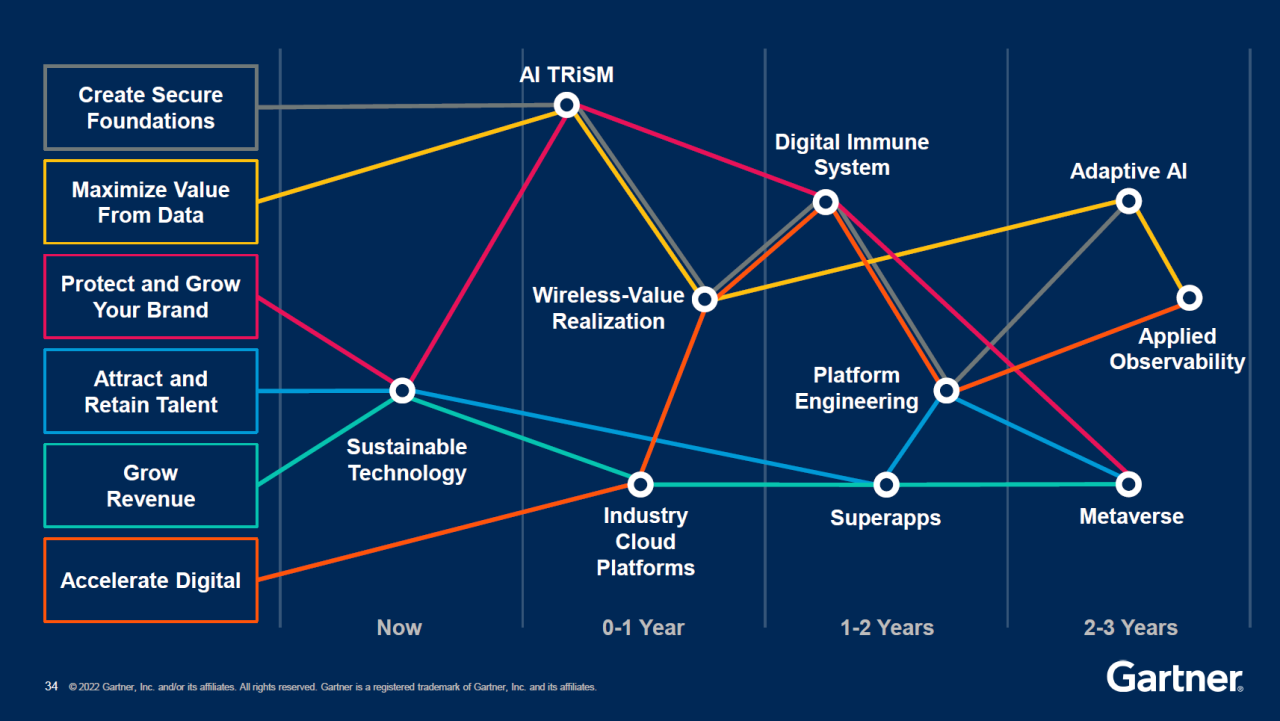
The technological landscape of 2025 will not be defined by a single, siloed innovation. Its true power lies in the convergence of these platforms. An AI platform will be supercharged by quantum computing. A Spatial Web application will be secured by blockchain-based identity and run on edge computing infrastructure. The IoT will provide the data stream that makes the AI intelligent.
For businesses and individuals, the imperative is to cultivate adaptability and a continuous learning mindset. The platforms of the future will demand new skills, new ethical considerations, and new organizational structures. The companies that succeed will be those that view these technologies not as mere tools, but as the new ecological system in which they must learn to thrive. The future is not something that happens to us; it is a platform we are all actively building, starting today.