
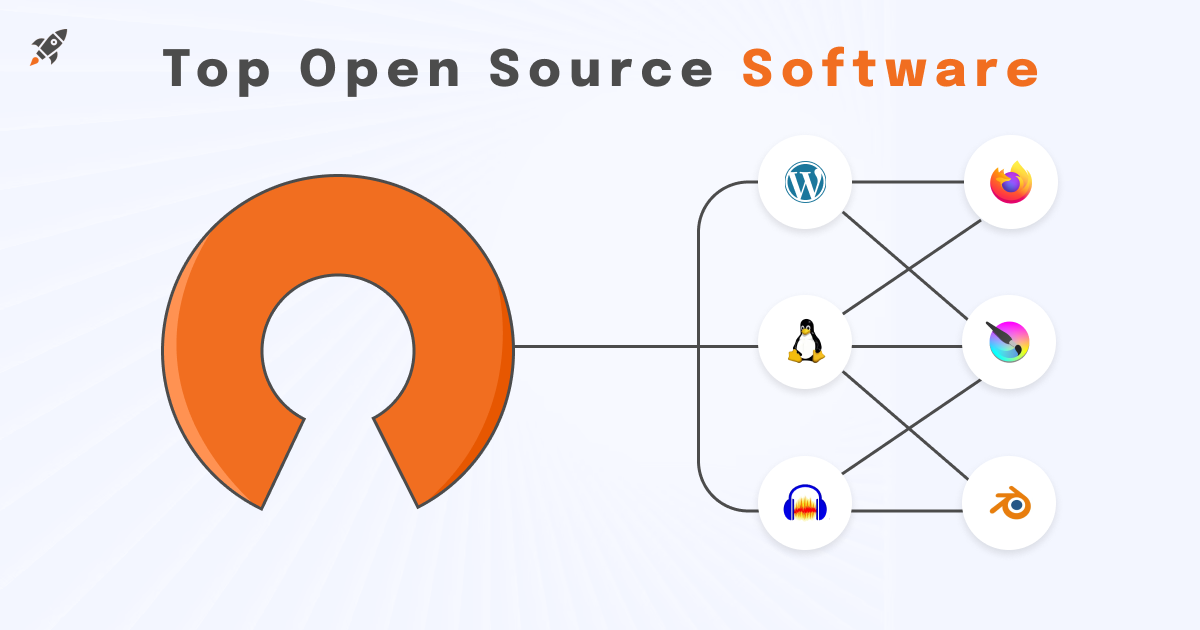
The technological landscape is undergoing a seismic shift, a quiet revolution that is dismantling long-held beliefs about software development, distribution, and ownership. For decades, the digital world was dominated by proprietary behemoths closed ecosystems where the source code was a fiercely guarded secret, licensing fees were a significant capital expenditure, and users were perpetually locked into a vendor’s roadmap. This paradigm, however, is being systematically challenged and overturned by the relentless, collaborative force of open-source technology. What was once a niche interest for hobbyists and academic idealists has exploded into the mainstream, becoming the foundational bedrock for modern innovation. From the smartphones in our pockets to the cloud infrastructures hosting global services, open-source platforms are no longer just an alternative; they are the default engine of progress, gaining unprecedented popularity by offering a powerful trifecta of freedom, flexibility, and formidable cost-effectiveness. This deep dive explores the multifaceted reasons behind this dominance, the tangible benefits for businesses and developers, the challenges that remain, and the future trajectory of this transformative movement.
A. Deconstructing the Open-Source Phenomenon: Beyond Free Software
At its core, open-source software (OSS) is defined by its licensing and its philosophy. The source code the human-readable instructions that make up a program is made publicly accessible. Anyone can view, use, modify, and distribute the software for any purpose. This stands in stark contrast to proprietary software, where the code is a trade secret, and users only receive the compiled, machine-readable binary.
However, to label open-source as merely “free software” is a profound oversimplification. The “free” refers more to “libre” (freedom) than “gratis” (zero cost). This freedom manifests in several critical liberties:
A. The Freedom to Use: The software can be deployed for any purpose, anywhere, without restrictions.
B. The Freedom to Study: Developers can examine the code to understand exactly how the program functions, which is crucial for security auditing and learning.
C. The Freedom to Modify: Users can adapt the software to their specific needs, fixing bugs, adding features, or optimizing performance.
D. The Freedom to Distribute: Copies of the original or modified software can be shared with others, fostering a cycle of continuous improvement.
This collaborative model is governed by a ecosystem of participants. Large commercial entities like Google, Microsoft, and IBM contribute massively to open-source projects, recognizing their strategic value. Non-profit foundations, such as the Apache Software Foundation and the Linux Foundation, provide governance, legal support, and a neutral ground for collaboration. And finally, millions of individual developers from unpaid volunteers to corporate-sponsored contributors form the lifeblood of these communities, writing code, reporting bugs, and creating documentation.
B. The Unstoppable Ascent: Key Drivers of Open-Source Popularity
The surge in adoption of open-source platforms is not a random occurrence. It is the direct result of several powerful, interconnected factors that address the core needs of the modern digital economy.
B.1. Unparalleled Cost-Efficiency and Financial Agility
For businesses, especially startups and small-to-medium enterprises (SMEs), budget constraints are a constant reality. The exorbitant licensing fees associated with proprietary enterprise software can be a significant barrier to entry. Open-source platforms eliminate this upfront cost. Organizations can download, install, and use powerful software like the Linux operating system, PostgreSQL database, or Kubernetes container orchestration system without a single dollar in licensing fees. This dramatically lowers the total cost of ownership (TCO), freeing up capital for investment in customization, support, and talent. The financial model shifts from paying for a license to paying for value-added services like expert support, guaranteed security patches, and managed hosting, giving businesses greater control over their IT spending.
B.2. Unmatched Flexibility and Freedom from Vendor Lock-In
Vendor lock-in is a perennial nightmare for IT managers. When a company builds its infrastructure on a proprietary platform, migrating to a different provider becomes a complex, expensive, and risky endeavor. Open-source software shatters these chains. Because the code is open and standards are often community-driven, businesses are not tied to a single vendor. If one service provider is unsatisfactory, they can switch to another or even bring maintenance in-house. This freedom empowers companies to tailor their technology stack to their exact requirements, creating bespoke solutions rather than forcing their processes to fit the limitations of a proprietary product.
B.3. Superior Security and Transparency Through Collective Scrutiny
A common, albeit outdated, criticism of open-source was that its openness made it less secure. The opposite has proven true. The “many eyes” theory posits that with a global community of developers able to inspect every line of code, vulnerabilities are identified and patched much faster than in a closed, proprietary model where only a limited number of employees can see the code. Security flaws in major open-source projects are often discovered and resolved within hours. This transparent process allows for independent security audits, building a higher level of trust. Organizations are not forced to simply take a vendor’s word for their software’s security; they can verify it for themselves.
B.4. A Hotbed of Innovation and Rapid Evolution
Proprietary software development is often constrained by corporate roadmaps, quarterly earnings reports, and market analysis. Innovation can be slow and deliberate. The open-source model, by contrast, is a crucible of rapid, organic innovation. A developer with a good idea can immediately implement it and propose the change to the community. This decentralized approach has led to breakthroughs in fields like artificial intelligence (TensorFlow, PyTorch), big data (Apache Hadoop, Spark), and cloud computing (OpenStack). The collaborative nature accelerates the pace of development, ensuring that open-source platforms are often at the cutting edge of technology.
B.5. Access to Premier Talent and Thriving Communities
Adopting a popular open-source platform means tapping into a global talent pool. There are millions of developers worldwide familiar with technologies like Linux, Python, and React. This makes recruiting and hiring significantly easier than finding experts in a niche, proprietary system. Furthermore, every successful open-source project is backed by a vibrant community. This community acts as a massive, distributed support network. Whether through forums, mailing lists, or Stack Overflow, developers can find answers, share best practices, and get help troubleshooting issues, often faster than waiting on a vendor’s support ticket system.
B.6. The Foundational Backbone of Modern Cloud and SaaS
The entire cloud computing revolution is built on open-source software. The vast majority of infrastructure-as-a-service (IaaS) and platform-as-a-service (PaaS) offerings run on Linux-based hypervisors. Containerization, the technology that enables modern microservices architecture, is dominated by Docker and Kubernetes. Databases like MySQL and PostgreSQL power countless web applications. Even proprietary cloud giants like Amazon Web Services, Microsoft Azure, and Google Cloud Platform are massive consumers and contributors to open-source, offering managed services based on these very platforms. The scalability, reliability, and cost-structure of the cloud would be unattainable without the open-source foundation upon which it is built.
C. Real-World Dominance: Case Studies of Open-Source Triumphs

The theory behind open-source is compelling, but its real-world impact is undeniable. Several platforms have become so ubiquitous that they are virtually invisible, powering a significant portion of the digital world.
-
The Linux Operating System: The quintessential open-source success story. From powering over 90% of the world’s cloud servers and all 500 of the fastest supercomputers to forming the core of Android, which dominates the mobile market, Linux is the undisputed king of operating systems. Its stability, security, and modularity make it the default choice for mission-critical infrastructure.
-
The Kubernetes Container Orchestration System: Born from an internal project at Google, Kubernetes was open-sourced in 2014 and has since become the standard for deploying, managing, and scaling containerized applications. It solved a critical problem in the era of microservices, enabling developers to build resilient and scalable systems with ease. Its ecosystem is vast, and it is now supported by every major cloud provider.
-
The Apache Web Server and the Nginx Ecosystem: For decades, Apache HTTP Server was the most popular web server on the internet. While its market share has been challenged by Nginx (which is also open-source), together they serve the vast majority of active websites. These projects handle the fundamental task of delivering web content to browsers, demonstrating the reliability and performance achievable through open-source development.
-
The VSCode Code Editor: A more recent example that shows how open-source can compete and win in the desktop application space. Microsoft’s VSCode, through its open-source core and extensible plugin architecture, has rapidly become the editor of choice for millions of developers across all programming languages, outpacing many established proprietary competitors.
D. Navigating the Challenges: The Flip Side of the Open-Source Coin
Despite its overwhelming advantages, the open-source model is not without its challenges. Prudent organizations must be aware of and plan for these potential pitfalls.
A. Fragmented Support and Accountability: The “community support” model, while powerful, can be inconsistent. For an enterprise facing a critical production outage, posting on a forum and hoping for an answer is not a viable strategy. This has given rise to a robust ecosystem of commercial vendors like Red Hat, Canonical, and SUSE, who provide enterprise-grade support, service level agreements (SLAs), and certified software distributions for a fee.
B. Complexity and the Burden of Integration: With great power comes great responsibility. The flexibility of open-source means that organizations often have to assemble their own technology stack from individual components. This requires significant in-house expertise to integrate, configure, and maintain these systems to work together seamlessly, which can be a complex and time-consuming task.
C. Security Vulnerabilities in the Supply Chain: While the core of major projects is well-audited, modern applications rely on hundreds of smaller open-source libraries (dependencies). A vulnerability in a single, obscure library can create a massive attack surface, as seen in incidents like the Log4Shell vulnerability. This necessitates robust software composition analysis (SCA) tools and vigilant dependency management processes.
D. Licensing Complexity and Compliance: There are dozens of open-source licenses, each with its own conditions. Some, like the GNU General Public License (GPL), are “copyleft” and require that any derivative work also be released as open-source. Failure to understand and comply with these licenses can lead to legal disputes and forced disclosure of proprietary code.
E. Implementing Open-Source Successfully: A Strategic Blueprint for Organizations
To fully harness the power of open-source while mitigating the risks, organizations must adopt a strategic and disciplined approach.
A. Define a Clear Open-Source Policy: Establish formal guidelines for which open-source licenses are acceptable, the process for approving new open-source components, and the responsibilities for ongoing maintenance and security monitoring.
B. Invest in In-House Expertise: Cultivate internal talent that understands the core open-source technologies in your stack. This empowers your team to handle basic troubleshooting, customization, and to make informed architectural decisions.
C. Leverage Commercial Support When Necessary: For business-critical applications, strongly consider partnering with a commercial vendor. The cost of enterprise support is often a wise investment compared to the potential business impact of a major system failure.
D. Prioritize Security and Dependency Management: Implement automated tools to scan your codebase for known vulnerabilities in open-source dependencies. Establish processes for regularly updating these dependencies to patch security flaws.
E. Contribute Back to the Community: Whenever possible, contribute bug fixes, documentation improvements, or even new features back to the projects you rely on. This not only strengthens the ecosystem but also enhances your company’s reputation and can influence the project’s direction.
F. The Future is Open: The Trajectory of Open-Source Technology

The momentum behind open-source is irreversible, and its influence is set to expand into new frontiers. We are already witnessing the rise of open-source hardware designs (e.g., RISC-V), which aims to bring the same collaborative benefits to processor architecture. In the realm of artificial intelligence, the most advanced frameworks and models are increasingly being developed in the open, accelerating research and democratizing access to AI capabilities. The concept of “Inner Source” applying open-source development principles and practices to proprietary internal code within a company is also gaining traction as a way to improve collaboration and code quality in large enterprises.
The narrative is no longer about if a company should use open-source, but how it can best leverage it to drive innovation, reduce costs, and gain a competitive edge. The open-source platform has moved from the fringe to the core, from a cost-saving measure to a strategic imperative. It represents a fundamental shift towards collaboration over isolation, transparency over obscurity, and community-driven value over vendor-controlled roadmaps. In reshaping the global technology landscape, open-source has not just gained popularity; it has laid the foundation for the digital future.