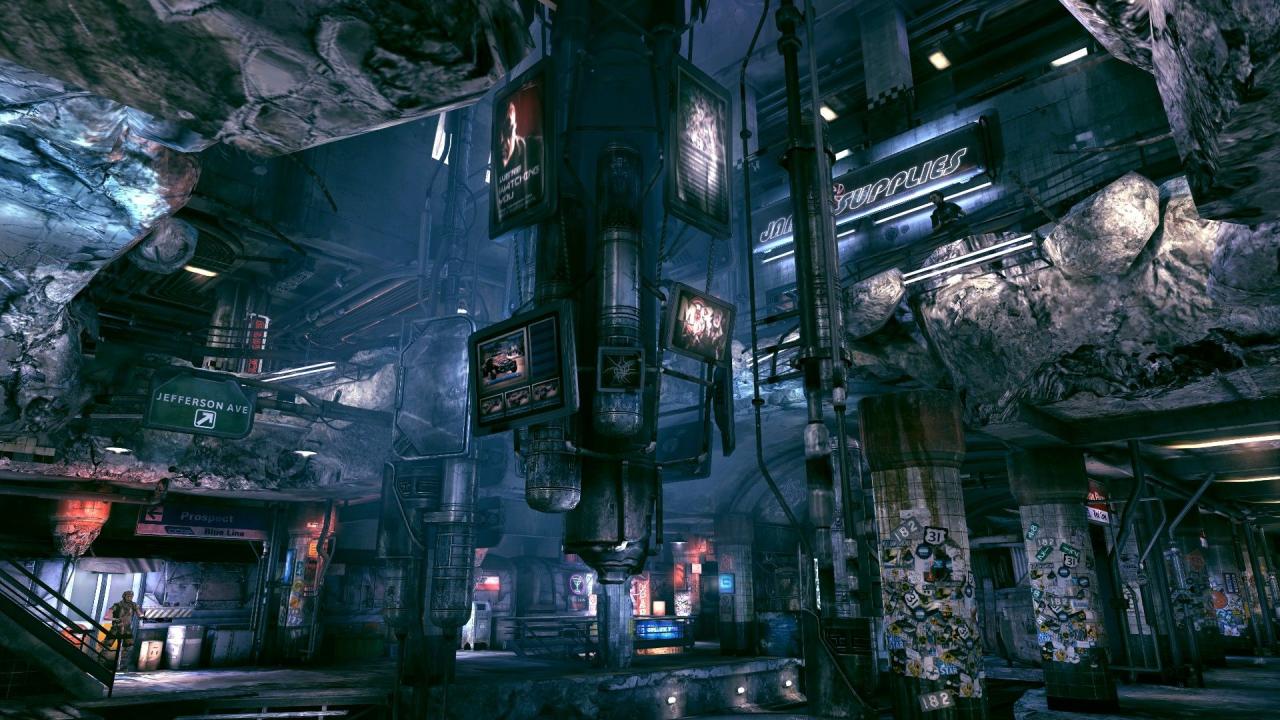
For centuries, human progress has been measured by the height of our structures, from the pyramids to the skyscrapers that define our modern skylines. However, a profound and quiet revolution is challenging this upward trajectory. As surface-level cities grapple with overpopulation, climate change, and resource scarcity, a new frontier is being explored not in the skies or in space, but directly beneath our feet. The concept of underground urban development is evolving from a sci-fi trope into a serious, technologically-driven solution for the future of human habitation. This is not about mere bunkers or subway tunnels; it is about the creation of multi-layered, fully-integrated, and thriving subterranean ecosystems. These are the Underground Tech Cities, and their designs are not just surviving they are thriving, propelled by a wave of cutting-edge innovations that promise to redefine urban life itself.
The impetus for this shift is undeniable. The world’s urban population continues to swell, placing immense strain on finite land resources. Sprawling megacities contribute to habitat destruction, lengthen commutes, and amplify their carbon footprint. Simultaneously, the escalating climate crisis presents existential threats, from rising sea levels flooding coastal cities to extreme heatwaves making surface life unbearable. In this context, the subsurface offers a stable, insulated, and vast expanse of untapped real estate. The vision for these underground tech cities is one of seamless integration with the surface, creating a three-dimensional urban fabric where life flows vertically as naturally as it does horizontally.
A. The Core Drivers Fueling the Subsurface Revolution
The move underground is not a retreat; it is a strategic adaptation. Several powerful, interconnected drivers are making subterranean cities an increasingly logical and attractive proposition.
A.1. The Imperative of Extreme Density and Land Conservation
The most immediate driver is spatial economics. As prime urban land becomes prohibitively expensive and scarce, developing downwards presents a viable alternative to endless horizontal sprawl. By relocating functions like transportation hubs, data centers, warehouses, industrial parks, and even agricultural systems underground, cities can free up surface land for parks, recreational spaces, residential areas, and cultural venues. This “inverted urbanism” model enhances the quality of life above ground while efficiently utilizing the space below. Cities like Singapore and Helsinki have already embraced this, building extensive underground networks for utilities, transit, and storage to preserve their limited surface area.
A.2. Unparalleled Climate Resilience and Environmental Control
The subsurface environment provides a natural buffer against the planet’s climatic volatility. Underground spaces maintain a remarkably stable temperature year-round, driven by the Earth’s geothermal mass. This inherent thermal inertia drastically reduces the energy required for heating and cooling, which constitutes a massive portion of a building’s energy consumption. Furthermore, these habitats are inherently protected from surface-level superstorms, tornadoes, floods, and extreme temperature fluctuations. For coastal cities facing existential threats from sea-level rise, building critical infrastructure and habitable zones below ground level offers a layer of security that surface structures cannot match.
A.3. The Quest for Ultimate Energy Efficiency and Sustainability
Building on the principle of thermal stability, underground cities are poised to become powerhouses of sustainability. The constant subterranean temperature allows for highly efficient geothermal exchange systems, where heat pumps can easily transfer warmth in the winter and dissipate excess heat in the summer. This drastically lowers the carbon footprint of climate control. Moreover, the immense, insulated mass of rock and earth surrounding these structures acts as a phenomenal thermal battery, storing energy and smoothing out demand peaks. When combined with renewable energy sources, this creates a hyper-efficient energy ecosystem that is far less dependent on fossil fuels.
A.4. Alleviating Surface Congestion and Rethinking Infrastructure
Surface traffic congestion is a plague on modern cities, resulting in billions of lost hours and significant pollution. Underground tech cities propose a multi-tiered solution. By moving major transportation arteries, logistics networks, and freight corridors below the surface, they can decongest the streets above. This opens the door for more pedestrian-friendly, green, and livable urban surfaces. The famous “Big Dig” project in Boston, while surface-level in its outcome, demonstrated the transformative potential of burying obstructive infrastructure to reunite a city with its waterfront.
B. The Technological Pillars of Modern Subterranean Engineering
The historical barriers to comfortable underground living darkness, claustrophobia, moisture, and structural integrity are being systematically dismantled by a suite of advanced technologies.
B.1. Cutting-Edge Excavation and Construction Technologies
The brute-force methods of the past are giving way to precision, automated, and surprisingly quiet techniques.
-
Tunnel Boring Machines (TBMs) on Steroids: Modern TBMs are engineering marvels. These colossal, automated machines can bore through rock and soil with incredible precision, simultaneously installing pre-fabricated tunnel linings as they advance. Newer “smart” TBMs are equipped with sensors for real-time geological analysis, allowing them to adjust their cutting heads and steering mechanisms dynamically to navigate complex subterranean landscapes.
-
Drilling and Blasting 2.0: While TBMs are ideal for long, straight tunnels, more complex, multi-chambered spaces require other methods. Controlled drilling and blasting techniques have become highly sophisticated, using computer simulations and precise explosive charges to fracture rock exactly where needed, minimizing vibrations and collateral damage to the surrounding geology.
-
The Rise of Robotic and 3D Printing Construction: For the intricate work of fitting out underground spaces, robots and 3D printers are indispensable. Swarms of robots can work continuously in hazardous or confined environments, assembling structures, laying utilities, and performing inspections. In parallel, large-scale 3D printers using specialized concrete mixes are being developed to print entire underground rooms and structural components on-site, reducing waste and construction time dramatically.
B.2. Revolutionary Light Transmission and Psychological Well-being Systems
The fear of a dark, sunless existence is perhaps the biggest psychological hurdle. Technology is providing brilliant solutions.
-
Fiber Optic Sunlight Harvesting: This technology uses large, computer-controlled heliostat mirrors on the surface to track the sun. They reflect concentrated sunlight down through specially designed shafts, where it is captured and “piped” through bundles of optical fibers. This natural light can then be distributed to plazas, parks, and even individual apartments deep underground, providing a full spectrum of natural light that changes with the time of day and weather.
-
Full-Spectrum Dynamic LED Lighting: For areas where natural light piping is not feasible, advanced LED systems mimic the sun’s diurnal cycle. These “circadian rhythm” lighting systems adjust their color temperature and intensity throughout the day cool and bright blue-white in the morning to simulate dawn, neutral during the day, and warm, dim amber in the evening. This regulates human melatonin production, maintaining healthy sleep-wake cycles and combating Seasonal Affective Disorder (SAD).
-
Virtual Skylights and Immersive Environments: High-resolution, ceiling-mounted LED panels can display real-time footage of the sky above or pre-recorded serene landscapes. These “digital windows” can provide an endless blue sky or a starry night, effectively eliminating the feeling of being enclosed. In public spaces, vast immersive projections can create the illusion of being in a forest, on a beach, or in any environment that promotes psychological comfort.
B.3. Advanced Air and Water Management for a Closed-Loop Ecosystem
Maintaining a pristine environment is non-negotiable. Underground cities are pioneering closed-loop systems that could teach surface cities a lesson in sustainability.
-
Sophisticated Ventilation and Air Quality Control: Unlike simple air ducts, these systems are integrated marvels. They use a combination of powerful, energy-efficient fans, deep air shafts that leverage natural stack effect ventilation, and complex filtration systems that scrub particulate matter, volatile organic compounds (VOCs), and radon gas. Air quality is constantly monitored by a network of sensors, and the system adjusts in real-time to ensure a constant supply of fresh, clean air.
-
Water Reclamation and Harvesting: Every drop of water is precious. Blackwater (sewage) and greywater (from sinks, showers) are treated to potable standards using advanced membrane bioreactors and reverse osmosis systems. Condensation from climate control systems is captured and recycled. Some designs even incorporate systems to harvest moisture directly from the surrounding geology. The goal is a near-total recycling rate, making the underground city largely independent of external water supplies.
B.4. Structural Integrity and Seismic Adaptation
Safety is paramount. Engineers employ multiple strategies to ensure these cavernous spaces remain secure for centuries.
-
Geotechnical Engineering and Continuous Monitoring: Before a single scoop of earth is removed, the geology is meticulously mapped using seismic and ground-penetrating radar. The design is then tailored to the specific rock or soil conditions. Once constructed, the entire structure is embedded with a “nervous system” of fiber-optic sensors and strain gauges that continuously monitor for the slightest shifts, stresses, or water ingress, allowing for predictive maintenance.
-
Seismic Dampers and Flexible Joints: In earthquake-prone zones, underground structures can be made safer than their surface counterparts. Massive seismic dampers, similar to those in skyscrapers, can be installed to absorb and dissipate kinetic energy. Flexible joints are built into the structure, allowing sections to move independently without collapsing during a seismic event. The surrounding earth itself can act as a dampener, reducing the amplitude of the shockwaves felt inside.
C. A Day in the Life of a Subterranean Citizen
To understand the appeal, imagine a day for a resident, “Elena,” in a fully realized underground tech city like “Geos-7.”
Elena wakes up in her apartment not to an alarm clock, but to a gentle, simulated sunrise from her dynamic lighting system. Her bedroom has a virtual skylight showing a live feed of the actual dawn sky above. The air is fresh and crisp, thanks to the constant, silent ventilation. After getting ready, she heads to a central “Sky Atrium,” a vast, multi-level public space bathed in genuine sunlight piped down from the surface. Here, trees and plants thrive under the natural light, and the sound of a recycled water feature fills the air. She meets friends for coffee at a café overlooking the atrium’s green space.
Her commute involves a short walk to a station for the city’s autonomous, electric mass transit pod system. The pod whisks her silently and efficiently through dedicated tunnels, avoiding any surface traffic. She works in an underground agricultural hub, a multi-acre vertical farm where she manages the AI systems that control hydroponics and LED grow lights, producing fresh greens for the city’s population.
After work, she visits an underground sports complex for a swim in a natatorium lit by a brilliant blue virtual sky. In the evening, she attends a concert in a subterranean amphitheater renowned for its perfect acoustics, before taking a leisurely stroll through an “artificial biosphere” park, a sealed ecosystem replicating a Mediterranean climate. She feels no sense of confinement; instead, she appreciates the comfortable, consistent temperature, the lack of noise pollution, and the proximity of all amenities.
D. Case Studies in Subsurface Innovation: From Vision to Reality
While fully integrated underground cities are still emerging, several real-world projects demonstrate the viability of the core technologies.
-
The Underground City of Montreal, RÉSO: This is one of the world’s largest underground complexes, spanning over 32 kilometers of tunnels connecting offices, hotels, shopping malls, universities, and metro stations. It provides a climate-controlled haven from Montreal’s harsh winters, demonstrating the social and commercial viability of subsurface urban networks.
-
Helsinki’s Master Plan: A City from the Bedrock Up: Helsinki has taken a strategic, city-led approach. Their underground master plan zones the subsurface for everything from data centers and shopping malls to swimming pools and a church. Their extensive network of tunnels is also designed to serve as a civil defense shelter, showcasing the dual-use potential of such infrastructure.
-
Singapore’s Deep Tunnel Sewerage System (DTSS): A marvel of engineering, the DTSS uses deep rock tunnels to convey used water to a centralized recycling plant. This frees up valuable surface land and exemplifies the principle of moving critical, space-intensive utilities underground.
-
The Brainchild of Beijing: The Dixia Cheng Bunker Complex: Originally built for civil defense, this vast, now-partially abandoned complex under Beijing is a fascinating historical example of large-scale underground construction, offering lessons in both the potential and the pitfalls of such endeavors.
E. Navigating the Subterranean Frontier: Challenges and Ethical Considerations
The path downward is not without its obstacles. Acknowledging and proactively addressing these challenges is crucial for responsible development.
-
The High Initial Capital Investment: The upfront cost for geological surveys, advanced TBMs, and safety systems is astronomical. This necessitates public-private partnerships and a long-term perspective that views this infrastructure as a multi-generational investment.
-
Psychological and Social Acceptance: Overcoming the “mole people” stigma and the innate human preference for sunlight and open views is a significant hurdle. This makes the psychological design elements the atriums, light wells, and virtual environments not luxuries, but absolute necessities for social license.
-
Regulatory and Legal Labyrinths: Who owns the subsurface rights? How deep do they extend? Building codes, safety standards, and emergency evacuation protocols for such environments are still in their infancy. A completely new legal and regulatory framework will need to be developed.
-
Socio-Economic Equity and Access: There is a risk that these comfortable, high-tech environments could become exclusive enclaves for the wealthy, creating a literal social stratification. Urban planners must ensure that underground developments are integrated into the broader city fabric and are accessible to all socioeconomic groups, preventing a new form of subterranean inequality.
Conclusion: A Resilient, Three-Dimensional Urban Future
The development of underground tech cities represents a fundamental paradigm shift in how we conceive of urban space. It is a move away from the two-dimensional plane of the map towards a rich, three-dimensional urban volume. This is not about abandoning the surface, but about creating a symbiotic relationship between above and below, where each layer is optimized for its purpose.
The technologies required to make these habitats not just viable, but desirable, are already here or rapidly maturing. From sunlight-piping and circadian lighting to automated construction and closed-loop life support, the engineering pillars are firmly in place. The driving forces of climate change, population growth, and resource efficiency make the exploration of this frontier not just an option, but an imperative.
The cities of the future will not be judged solely by the height of their towers, but by the depth and intelligence of their foundations. As we engineer these subterranean habitats, we are building more than just tunnels and chambers; we are crafting resilient, efficient, and surprisingly humane arkologies for the centuries to come. The future of urban life is, quite literally, looking up by first looking down.